

As we found out last week, Vikings were often buried with their personal possessions.
.
We asked you to try to identify what they are. We didn’t expect you to know, we wanted you to look carefully and come up with a reasonable suggestion based on what you could see – so don’t worry if you didn’t identify any of them! Archaeologists have to make these hypotheses all the time – and very often get it wrong. We loved reading your suggestions.
.
So here are the artefacts with explanations of what they really are. Most are reproductions – except number 6. It is a genuine Viking artefact that now belongs to Mr Wright. It’s a long story…
.
.
Object 1
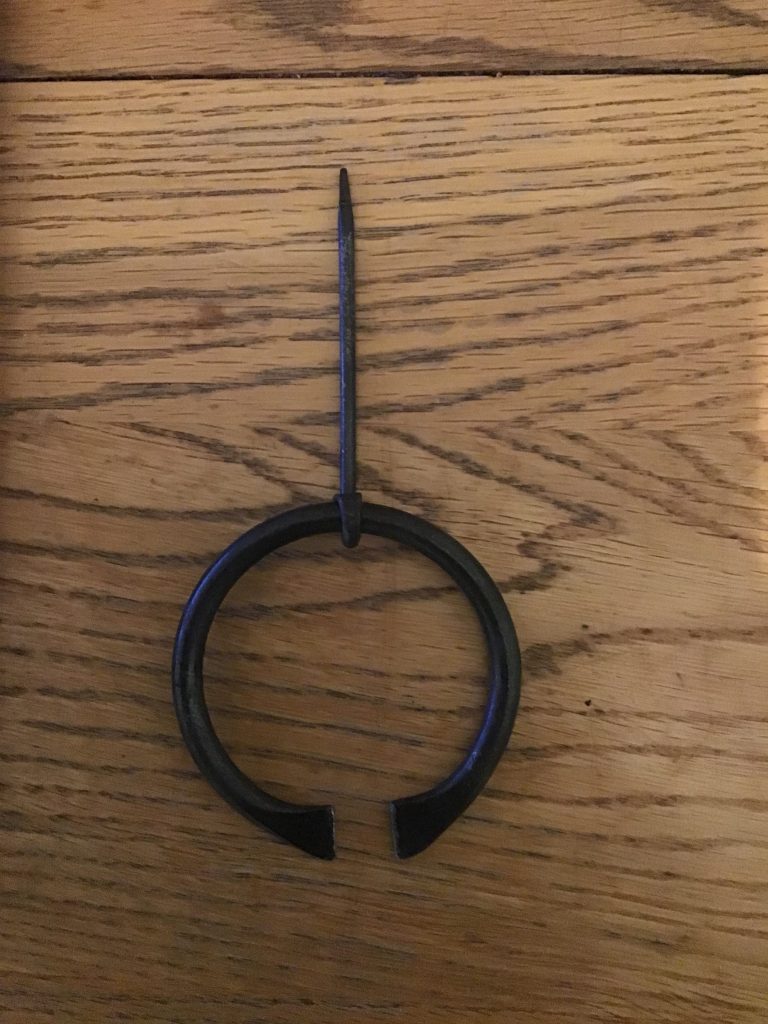
This object is 13 cm from the very top to the bottom.
.
This is a Penannular Brooch
This brooch is made of iron. It is known as a penannular brooch (penannular means an incomplete circle). This is a very simple design and was very common in Viking times. More elaborate brooches made of brass and silver have been found, but are much more rare. These brooches are not simply ornamental – they have an important purpose: they are used to fasten two pieces of material together. A very common use of these brooches would be to secure a cloak around a person’s neck. They were used by both men and women.
They are used by pushing the pin through fabric and then rotating the pin around the ring to stop it falling out.
Here is how they work:
Object 2
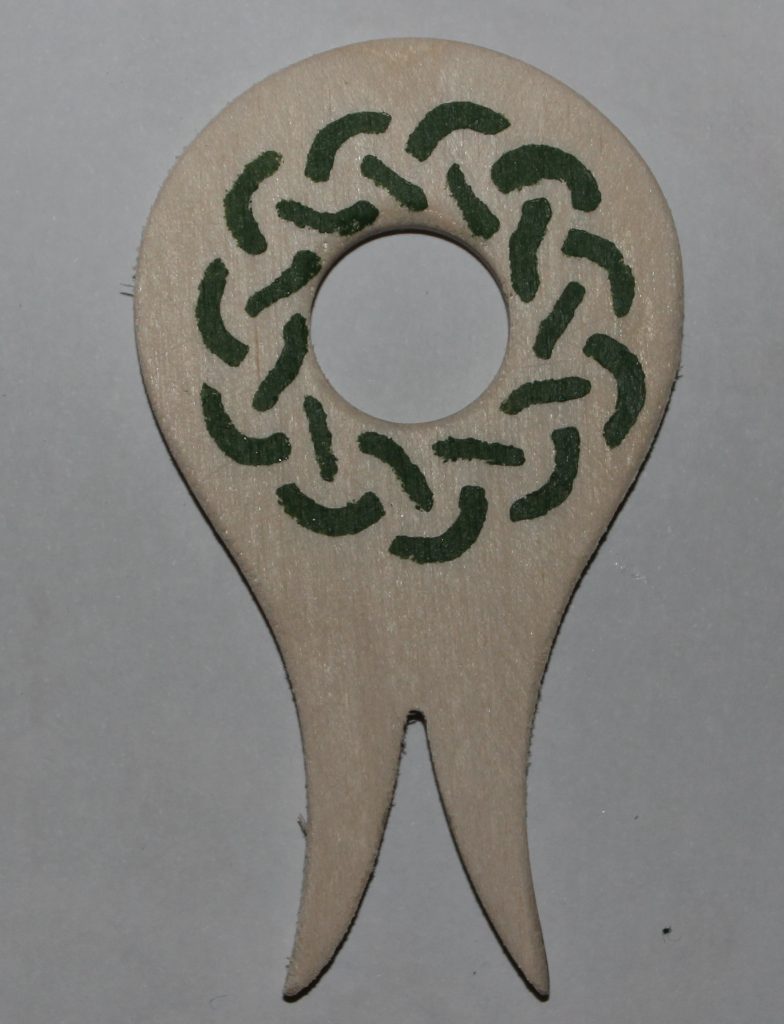
This object is 9cm from the top to the bottom. It is about 5cm wide at the widest point
.
.
This is a lucet
A lucet is also known as a chain fork. This lucet is made from wood and every Viking household would have lucets. They are used to make braid or cord (chain) which can be used for clothing or as string for any light tying and knotting. Cords made using a lucet do not stretch and are strong. Making cord using a lucet is relatively quick.
Watch a lucet being used:
Object 3
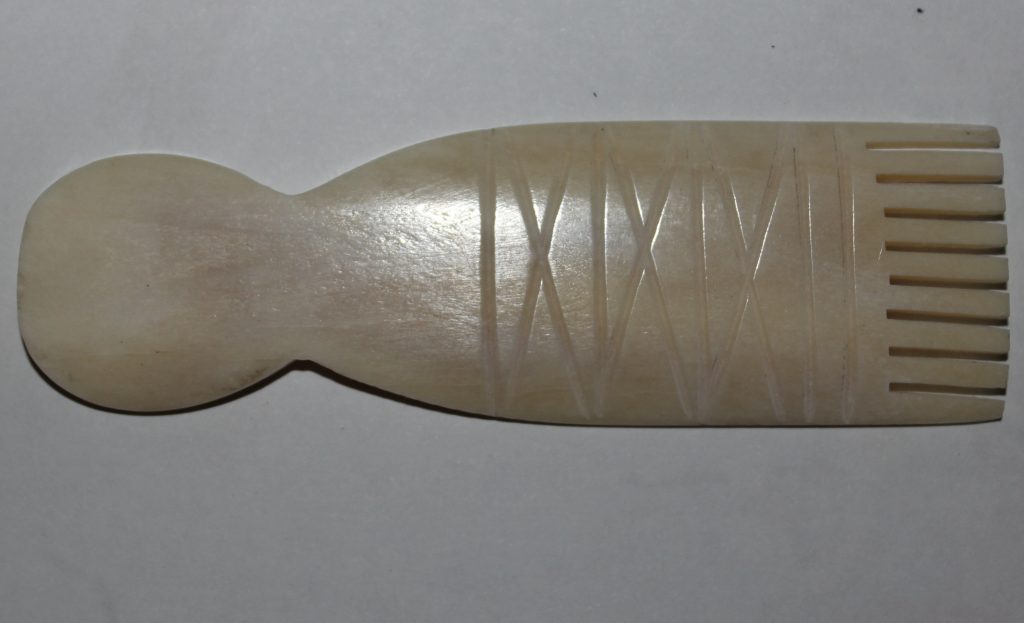
This object is 12.5 cm in length.
.
.
This is a beard comb
This comb is made from bone – probably from a cow. It is a simple design but is designed for thicker hair. The wide teeth are stronger than those used on a normal comb. The strength, the narrow width of the comb and the long handle are designed for a particular job – combing the tougher hair of a man’s beard.
Unlike the dirty smelly Saxons, Vikings were very concerned with their appearance, especially their hair. According to writing by an English monk, Vikings “were – according to their country’s customs – in the habit of combing their hair every day, to bathe every Saturday, to change clothes frequently, and to draw attention to themselves by means of many such frivolous whims.” Saxons found this washing and combing malarkey most peculiar.
Object 4
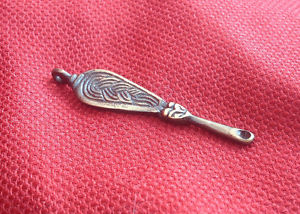
This object is 6cm long. Look carefully at the end!
.
My favourite object is … an ear spoon!
As we’ve seen, Vikings valued personal hygiene! Ear spoons were important items for Vikings. They were used to clean ears by scooping ear wax out with the tiny spoon. This ear spoon is made of brass and has intricate designs on the handle. It has a hole so that it can be suspended form a cord. This was probably so that it could be hung up or tied to another object to avoid losing it. It is unlikely that it was worn around the neck.
Object 5
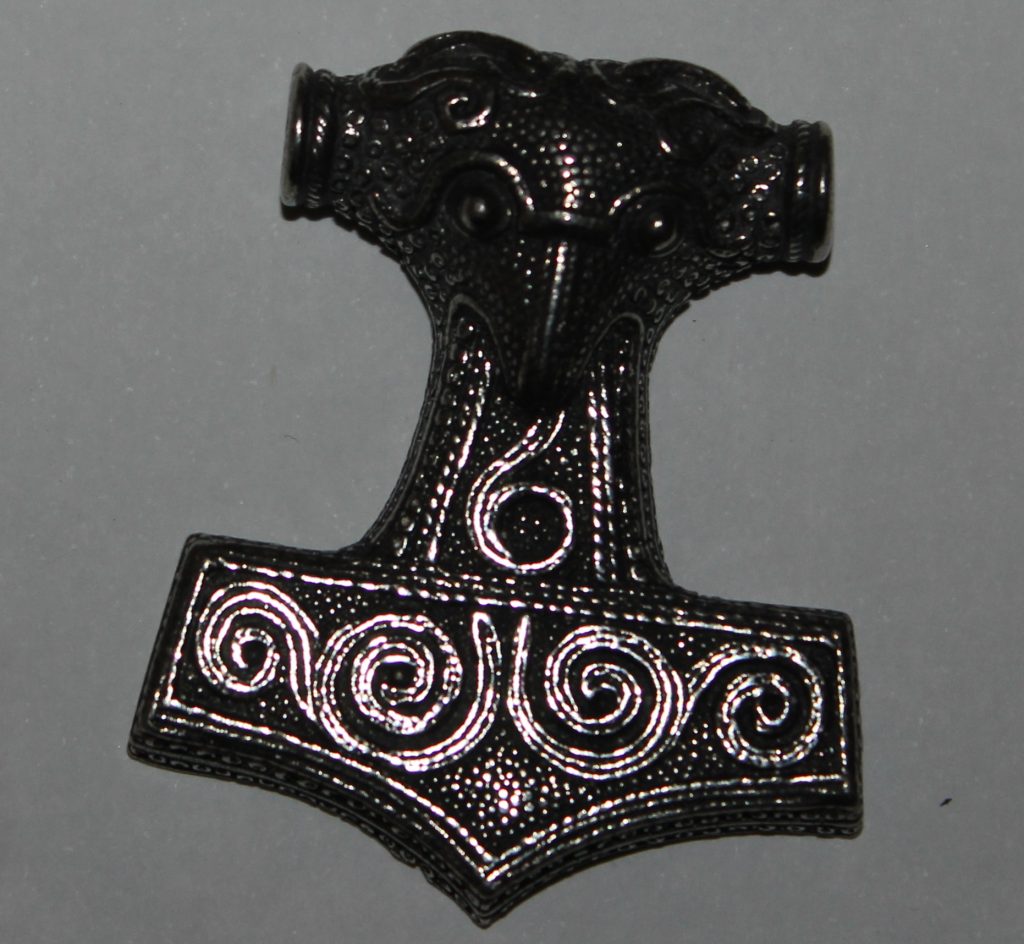
This object is 3.5cm from the very top to the bottom.
.
This is a hammer amulet
An amulet is a charm. This would have been worn around the neck. This amulet is made of silver and would have had a small jewel set in the circle in the middle. A hammer was the weapon of the Viking God Thor, who created thunder, lightning and was a symbol of strength. Thor was thought to protect warriors. This amulet would be worn by warriors as a symbol of strength and to protect them in battle.
The Viking God Odin oversees Valhalla – the place where brave warriors go when they are killed in battle and where they believed that they could fight and drink all day, every day for eternity. Odin always has two ravens with him so the bird’s head on the hammer is a symbol of Odin.
.
Object 6
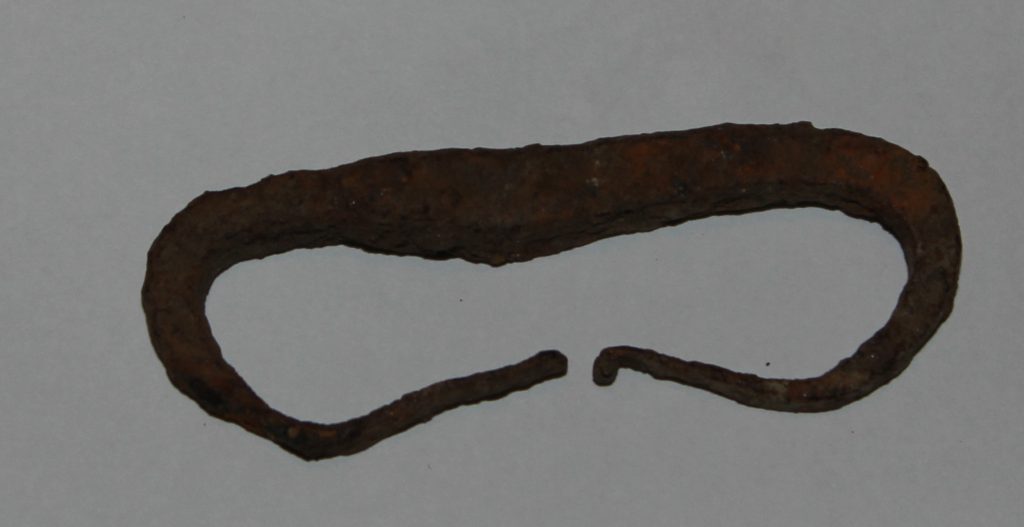
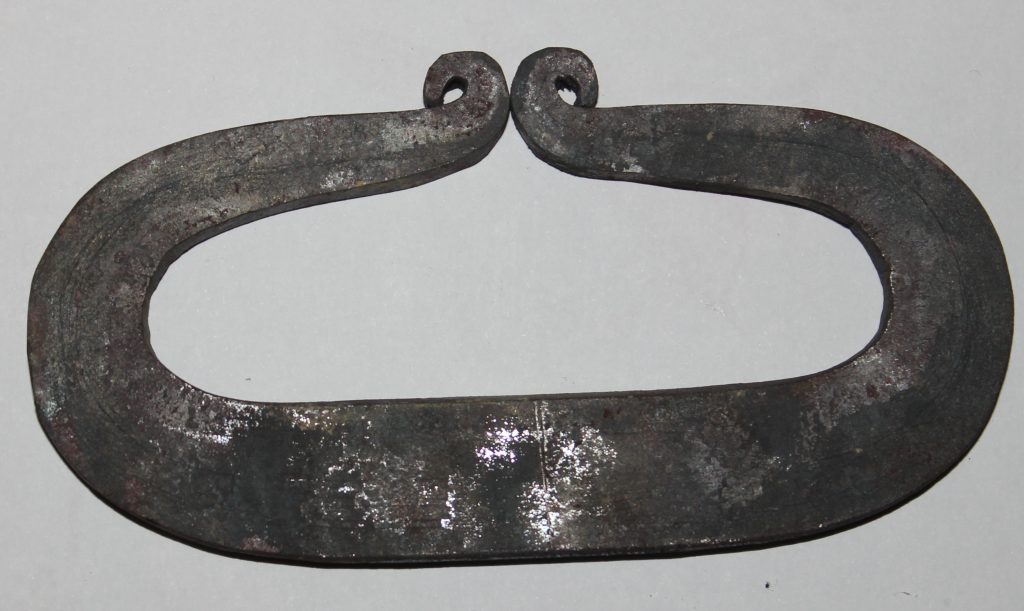
This object is 7cm in length. The second photo shows a modern reproduction of the same type of item.
.
This is a hammer amulet
This is a very important piece of equipment. Being able to start a fire easily is important for warmth, for cooking and for making weapons. To make a fire, you need sparks and this is what a fire striker is for.
The fire striker is made from steel. It is used to start a fire. It must be used with flint, a very hard stone. Flint is so tough that when it strikes the steel, it scrapes the steel and heats it by friction. Tiny pieces of red hot metal fly from the fire striker. These are sparks. If the sparks land on a particularly flammable material (tinder), a small fire can be started. Dry flax (from the linseed plant) was often used as it quite flammable.
A Viking warrior would carry a fire striker and tinder with them at all times.
Watch how a fire striker is used: